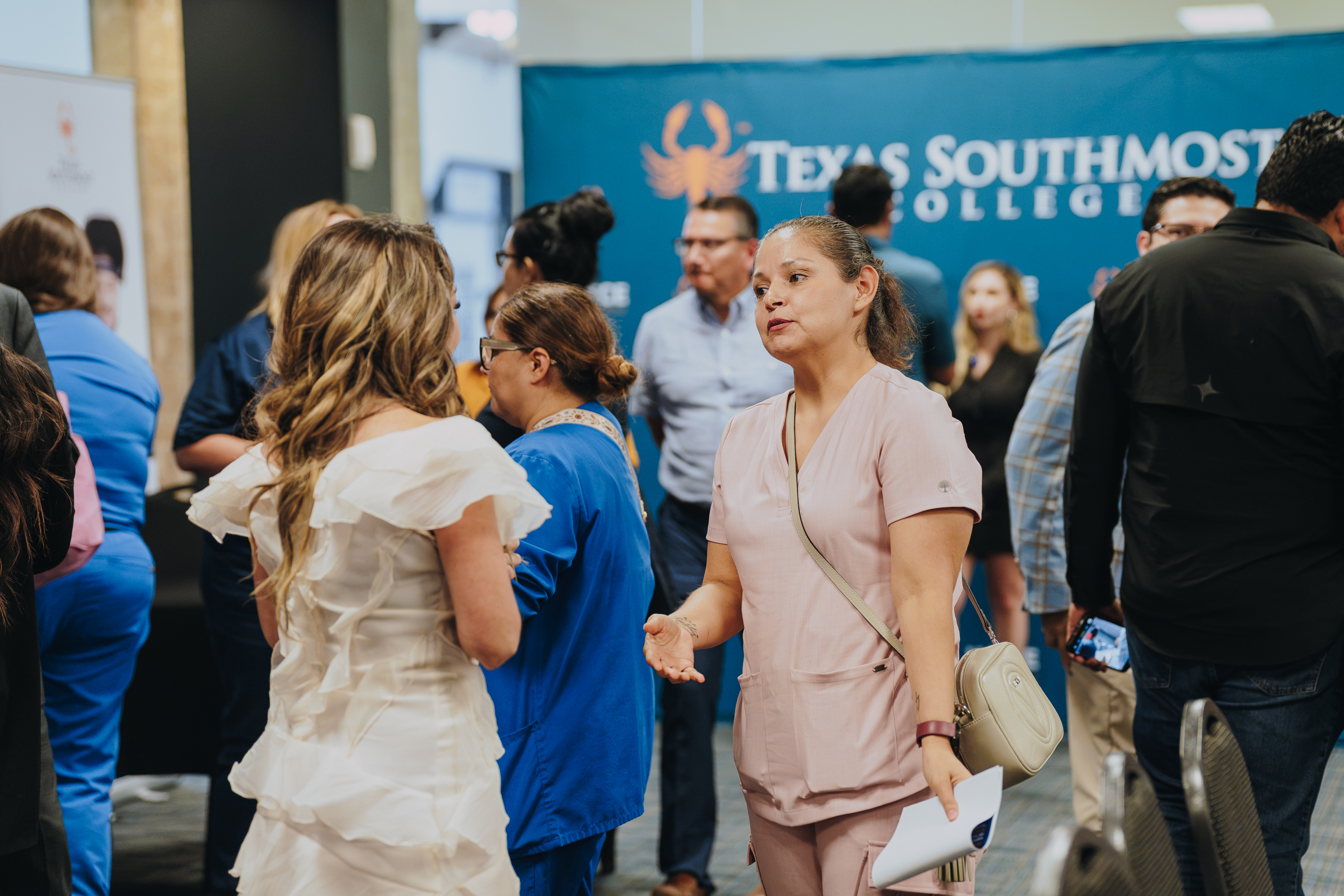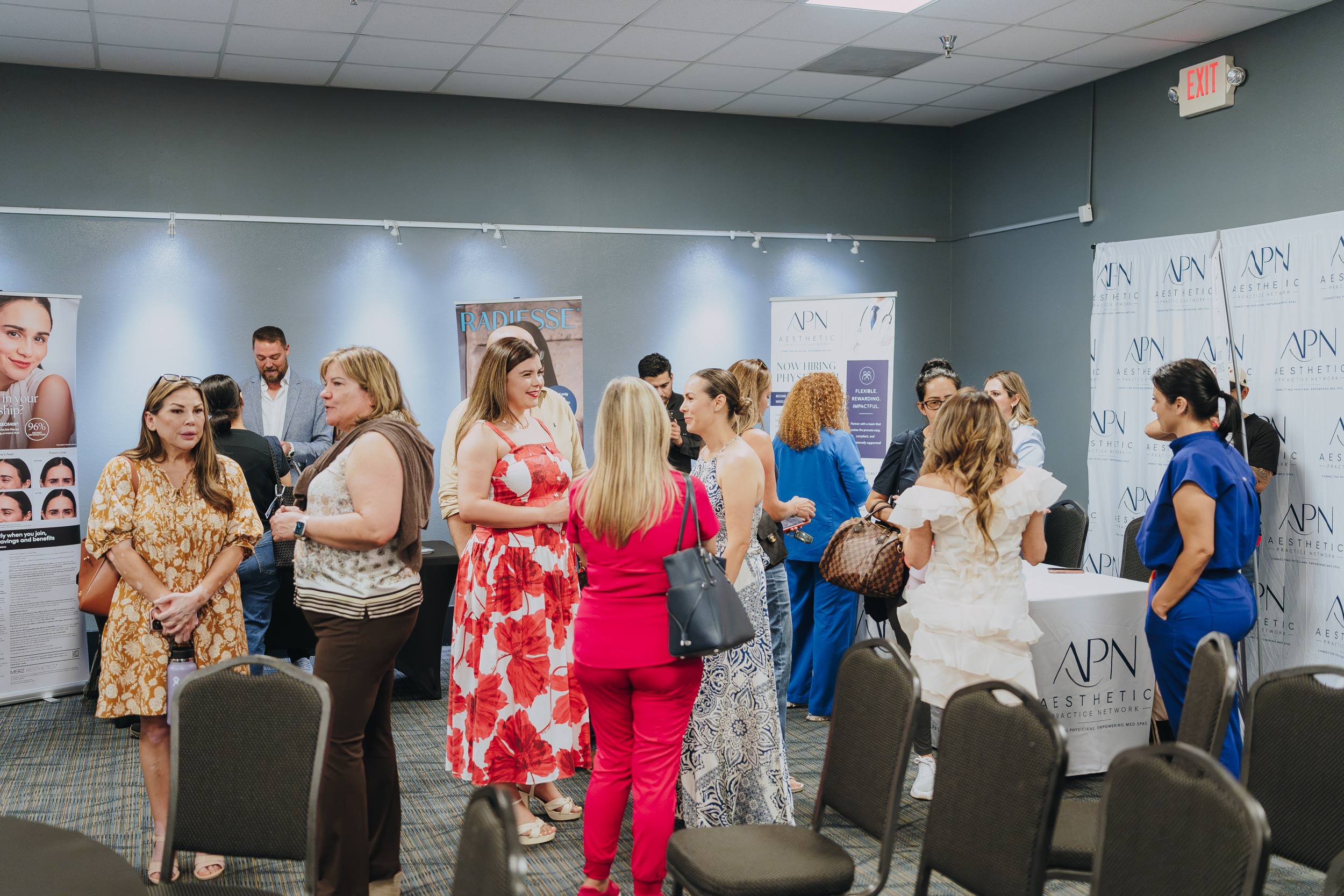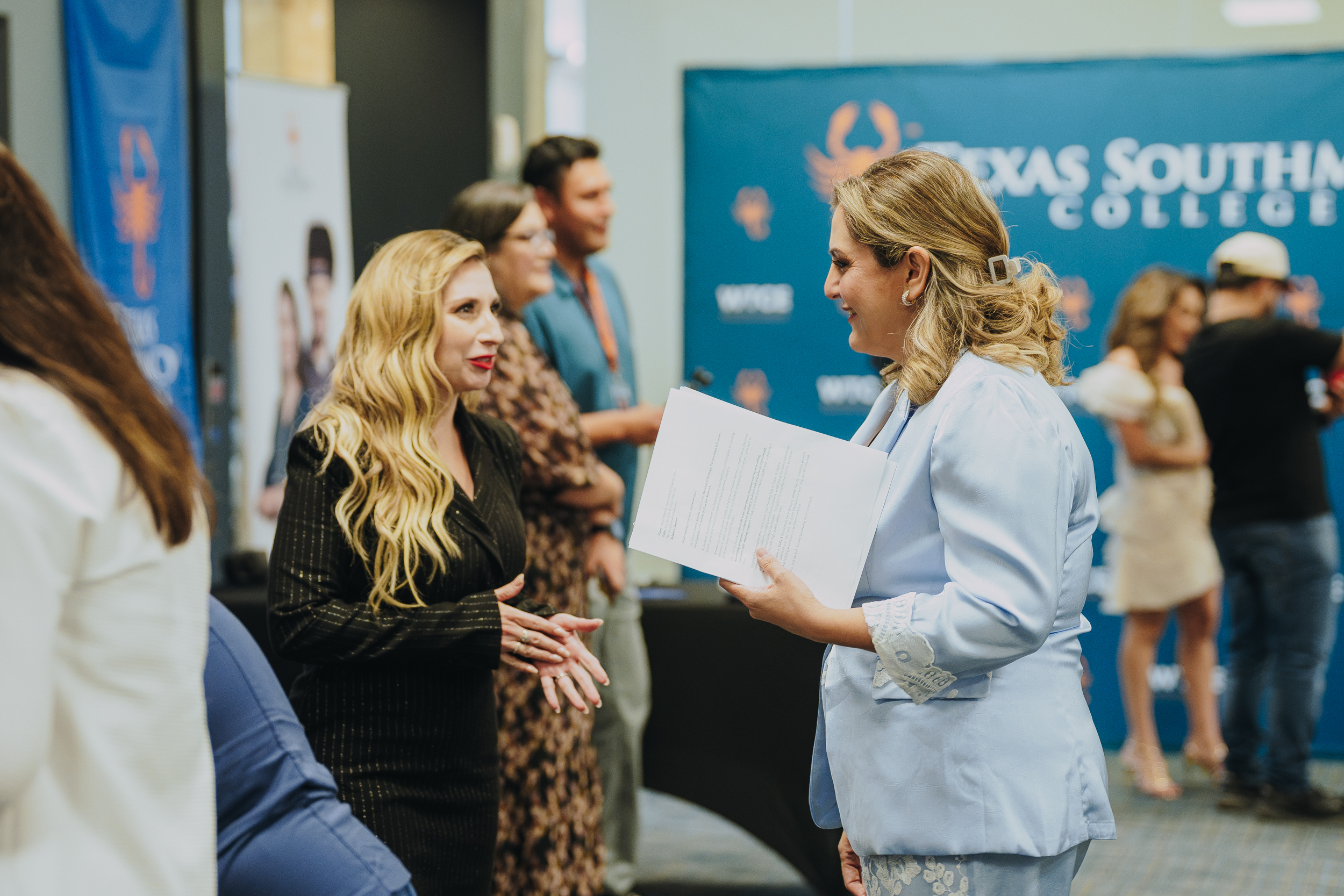
BROWNSVILLE, Texas — Texas Southmost College hosted an information session for its new Medical Aesthetics Injector Certificate program on Thursday, July 30, drawing a packed crowd to the ITEC Center Art Gallery.
The event introduced licensed health care professionals and prospective students to lead instructor Cynthia Diaz while connecting attendees with vendors offering products and services related to the growing medical aesthetics industry.
“I’m glad we’re bringing courses to the collegiate level, so we can make sure everybody is practicing safely and our community is safe as well,” Diaz said.
Diaz brings more than a decade of experience in medical aesthetics. She has received specialized training abroad and owns Allure Medical Aesthetics Institute, a medical spa where she has trained aspiring professionals pursuing careers as aesthetic injectors.
Through her extensive industry connections, the information session included appearances from industry experts who talked with guests about what it takes to transition from the classroom to clinical practice.
Upon completing the certificate program, graduates will be required to work under the supervision of a medical director, who provides clinical leadership and regulatory oversight.
Laura Arreola, director of Aesthetic Practice Network (APN), attended the information session to explain the company’s medical director services and the importance of proper oversight.
“It’s very important that they don’t just take the training and go off to start injecting,” Arreola said. “They need to work with a medical director and carry liability insurance. We’re all here to make sure that once they want to take that training, they continue doing it the right way.”
Arreola explained that medical directors conduct Good Faith Exams (GFEs), which evaluate a patient’s medical history before treatment.
“Once they have a patient for the first time, they have to make sure they complete that Good Faith Exam,” she said. “It’s about gathering the patient’s medical history to determine whether any existing condition could affect the procedure. The doctor can then advise the injector on the appropriate course of action.”
Speakers also emphasized the importance of obtaining specialized liability insurance before performing aesthetic procedures.
Claudia Villarreal, owner of Star Medical Aesthetics and Wellness Insurance, said many nurses mistakenly believe their existing professional liability policies automatically cover cosmetic injections.
“A lot of medical professionals think because they have professional liability coverage for their LVN or RN license, it covers everything, and it doesn’t,” Villarreal said. “That covers the medical side of their practice. They also need professional liability insurance specifically for medical aesthetics to cover those cosmetic services.”
Villarreal noted that specialized insurance protects providers from claims involving complications or patient dissatisfaction.
“It’s very important to have insurance because you’re providing services to a patient,” she said. “A patient may claim they don’t like the results, experience an allergic reaction or decide to pursue legal action. Having the proper coverage provides protection for the injector.”
Representatives from Merz Aesthetics and Revance Aesthetics also met with attendees to discuss FDA-approved injectable products and the importance of purchasing them through authorized distributors.
“There are a lot of counterfeit products out there,” said Mark Mathew, senior injectable territory manager for Merz Aesthetics, whose territory includes the Rio Grande Valley, Laredo and Corpus Christi. “That’s why it’s important to work with your local representative or directly with the manufacturer. What we put into our patients really matters, and the science behind those products matters.”
Conor Kearns, a professional consultant for Revance Aesthetics, echoed those concerns, encouraging providers to use only legitimate, FDA-regulated products.
“Otherwise, you don’t know what’s being injected,” Kearns said. “Companies like Revance are highly regulated by the FDA. These products are extensively studied, and there’s clinical data behind every claim we make. Providers and patients should know exactly what they’re receiving.”
Kearns added that South Texas is one of Revance Aesthetic’s highest-volume markets, making TSC’s new certificate program a timely addition to the region.
“For the students in this program, it’s a tremendous opportunity,” he said. “The men and women down here care about how they look.”
Diaz agreed, saying the program arrives at a time when interest in non-surgical cosmetic procedures continues to grow.
“It’s the perfect time to offer this at the collegiate level,” she said. “There’s so much interest in medical aesthetics in South Texas. There are so many patients looking for these non-surgical and in-and-out procedures.”
The program’s inaugural cohort will begin classes Friday, Sept. 11, 2026. The initial offering will consist of a two-day, 16-hour course, with future cohorts expected to complete the program in a hybrid format.