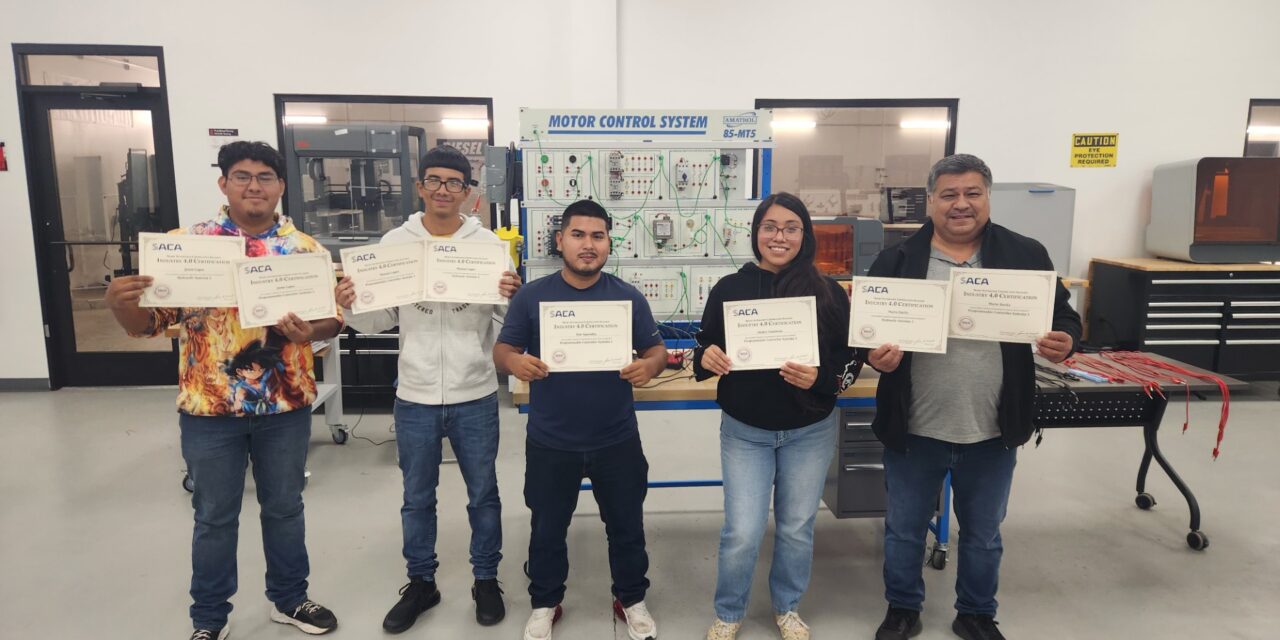
Students in Texas Southmost College’s Electro-Mechanical Technician program proudly display their recently-earned Smart Automation Certification Alliance (SACA) certificates. The industry-recognized certification not only demonstrates the students’ mastery of various skills in their chosen field, but it will also allow the students to open doors to careers in the near future. Pictured left to right: Jesus Lopez, Manuel Lopez, Eric Saavedra, Odalys Contreras, and Mario Davila.
A group of Texas Southmost College students is moving one step closer to careers in high-demand technical fields after earning industry-recognized certifications through the Smart Automation Certification Alliance (SACA). The achievement highlights both the strength of TSC’s Electro-Mechanical Technician program and the growing opportunities available to students trained in automation, mechanics, and advanced industrial systems.
For students like Jesus Lopez, Manuel Lopez, Eric Saavedra, Odalys Contreras, Mario Davila, and Diego Garcia, earning their SACA credentials marks an important milestone. Each completed certifications in Programmable Controller Systems 1, Hydraulic Systems 1, and Electric Motor Control Systems 1, demonstrating mastery of essential competencies valued across a broad range of technical fields.
The Electro-Mechanical Technician program provides an introduction to complex electronic and mechanical systems, preparing students to troubleshoot and repair equipment used across modern industries. Electro-Mechanical Trainer Eutiquio Calderon explained that the program equips students with foundational skills in programmable logic controllers (PLCs), hydraulic and pneumatic systems, motor control systems, wiring and schematic interpretation, and general equipment troubleshooting.
“These students learn how to apply PLC principles, operate and maintain hydraulic and pneumatic systems, and build and troubleshoot motor controls,” Calderon said. “By the end of the course, they’re able to interpret diagrams and resolve issues in electro-mechanical equipment to ensure optimal performance and safety.”
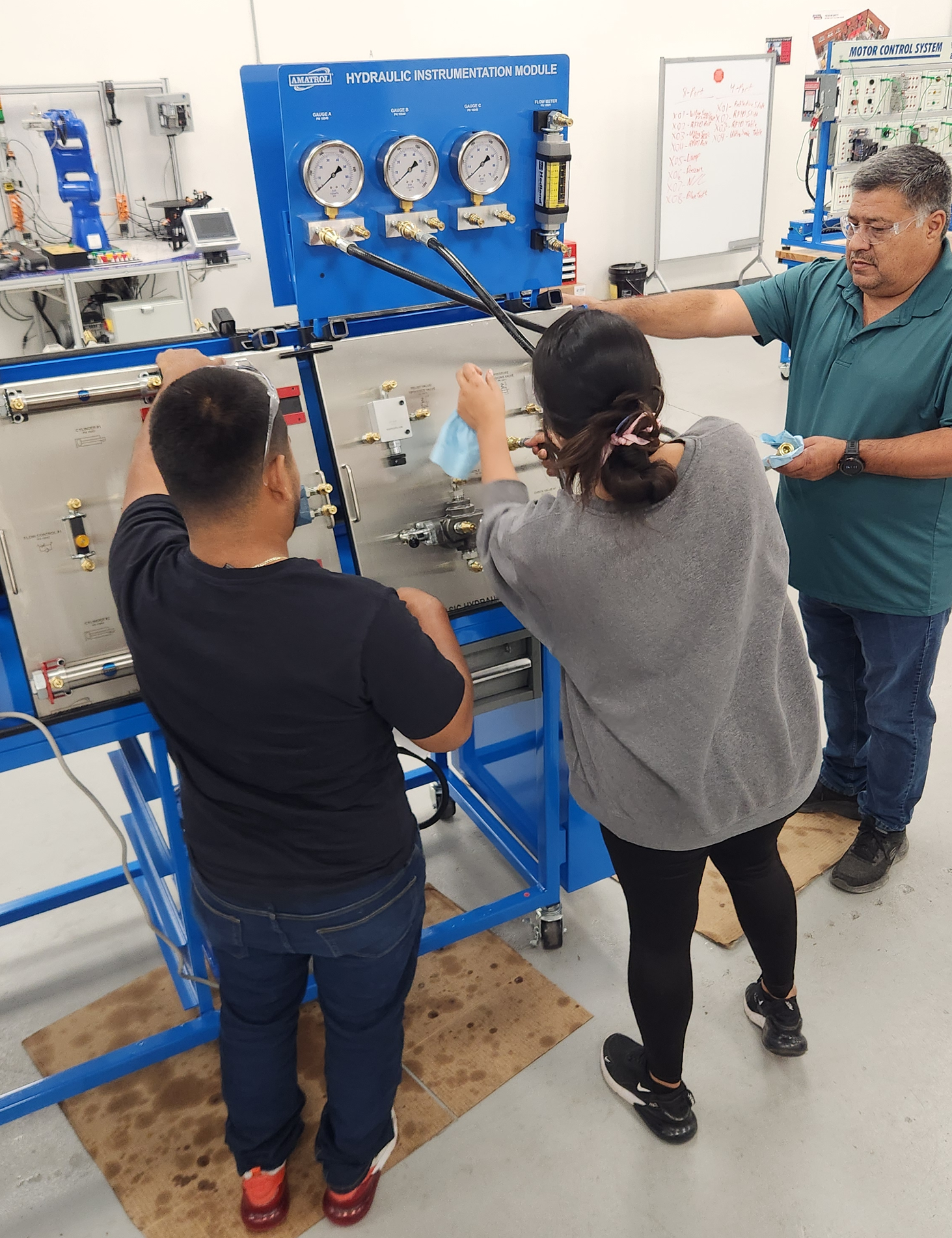
Training begins with PLC programming, where students use laptops and dedicated PLC equipment to explore ladder logic, equipment interfacing, and real-world troubleshooting scenarios. From there, they complete 10 hands-on labs in hydraulics and pneumatics using training systems designed to walk them step-by-step through control valves, fluid power assemblies, and system operation. The course concludes with motor control training, allowing students to build electrical circuits and diagnose system failures using industry-standard equipment.
This technical foundation directly prepares students for SACA certification, which is widely recognized by employers seeking workers skilled in Industry 4.0 technologies. SACA, a nonprofit organization, develops modular certifications aligned with international skill standards and validated through hands-on evaluations and online, proctored testing. Certifications are reviewed annually to ensure they remain current with evolving industry practices.
“These credentials help students show employers that they have real, tested skills,” Calderon said. “Industry partners know what SACA represents, and they know these students can apply what they’ve learned.”
Graduates of the program are well-positioned to enter careers in renewable energy, food and product processing, general manufacturing, and the oil and gas sector. Calderon explained that demand for skilled electro-mechanical technicians is high across the state and nationwide, with many opportunities requiring relocation to North Texas or other parts of the country. To support students in their job search, he has already begun developing a list of industry contacts who are eager to review resumes from TSC graduates.
Students who complete the Electro-Mechanical Technician program can also earn an Occupational Skills Award, adding another credential to their résumés. Combined with their SACA certifications, students leave the program with strong technical preparation and industry-recognized proof of their abilities.
As industries continue to rely on automated systems, robotics, and advanced manufacturing technologies, programs like TSC’s play a vital role in building the region’s technical workforce. With hands-on training, rigorous certification opportunities, and committed instructors, students gain both the skills and confidence needed to pursue meaningful careers.
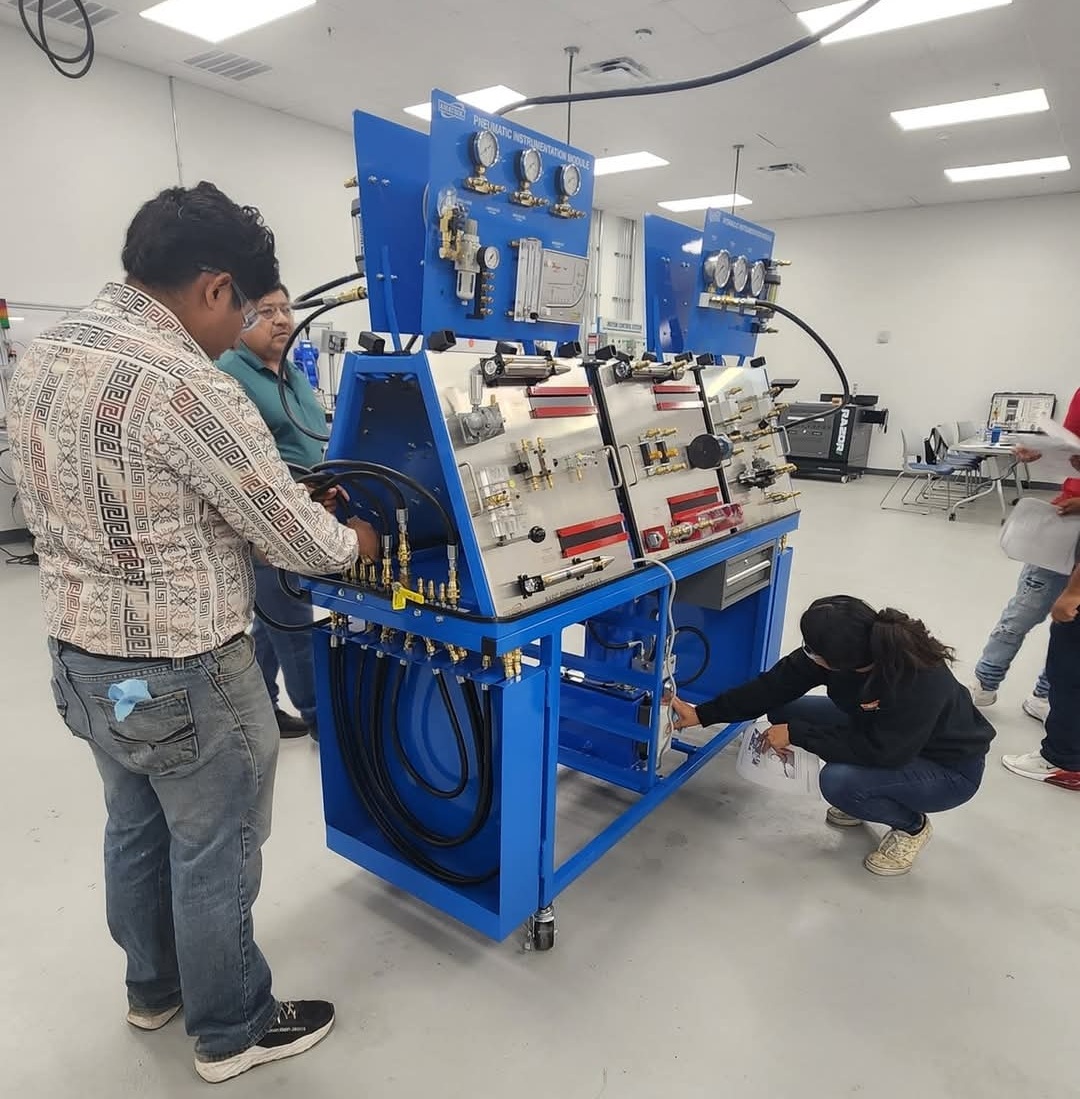
TSC Electro Mechanical Technicians
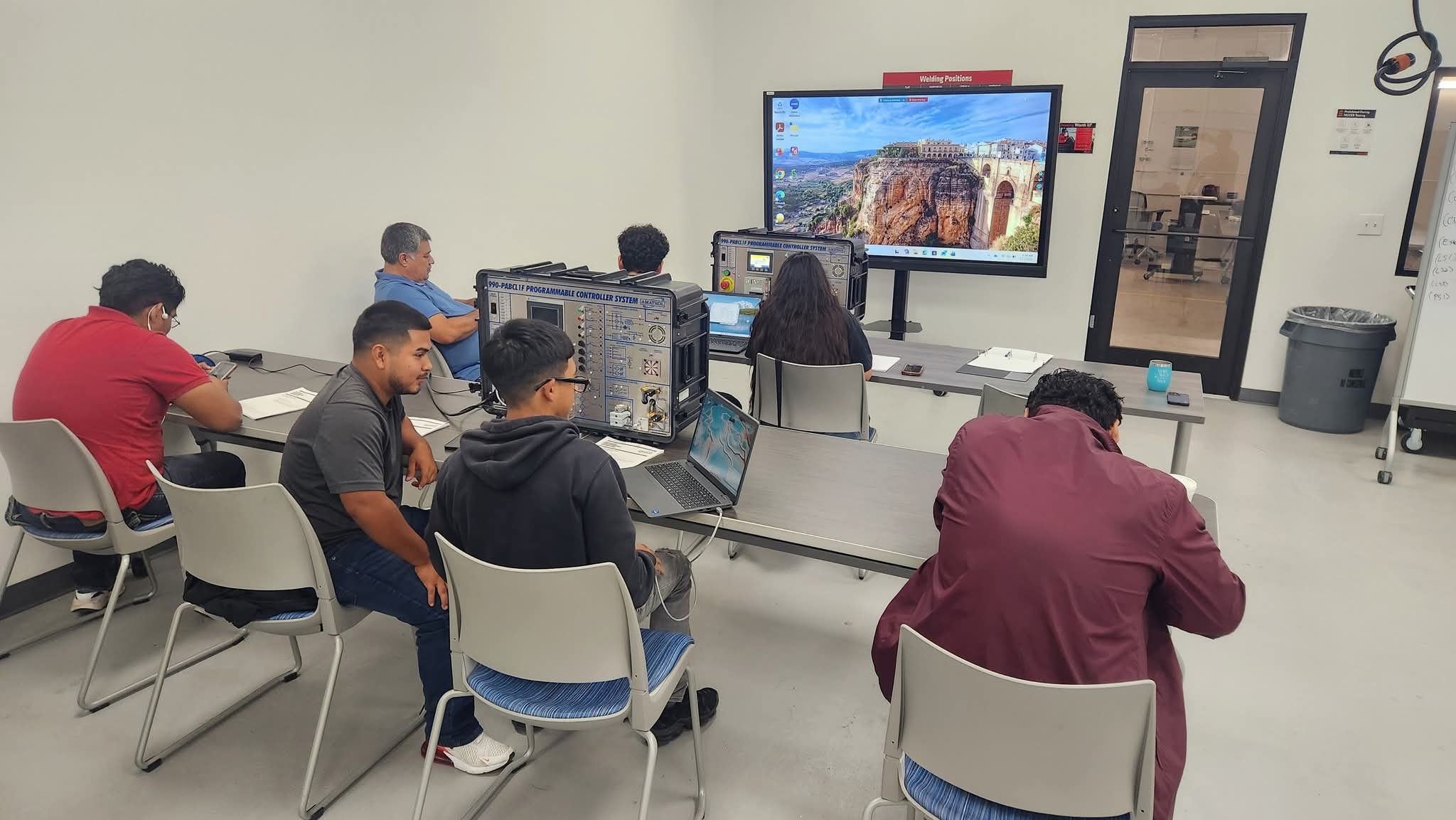
TSC Electro Mechanical Technicians
TSC Electro Mechanical Technicians